 Janani Shanmuganathan
Disclaimer: This article is meant to be informational and does not constitute legal advice. Reading this article does not make me your lawyer. If you are charged with a criminal offence, seek legal advice immediately.
At the end of Part 1 it was revealed that, upon being charged, police officers have the discretion to release an individual at the police station or hold and bring them to court for what is known as a ‘bail hearing’.
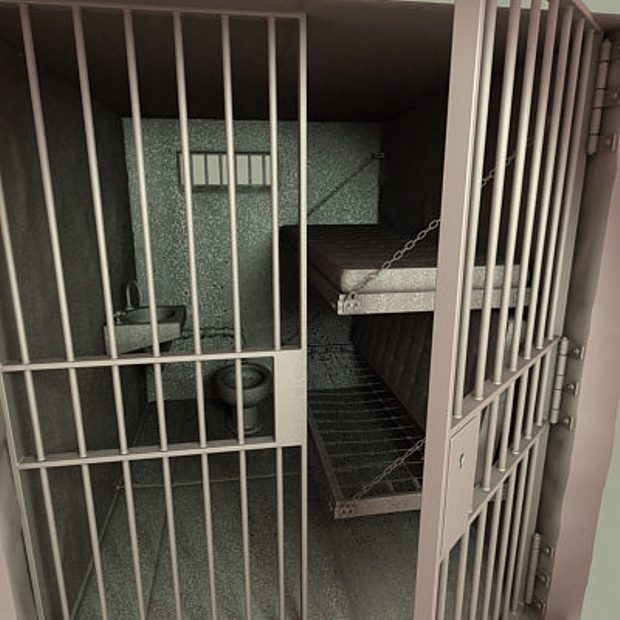
The bail hearing takes place early on in the criminal justice process. However, its importance should not be underestimated. The outcome of a bail hearing determines whether an accused person will be spending their time awaiting trial in or outside of custody. Depending on the location of the courthouse and anticipated length of trial, it can take up to a year for a matter to go to trial. Perhaps even longer. That is a considerable length of time for one to be counting the days in jail.
The Logistics
The Criminal Code provides that within 24 hours of being charged (or as soon as otherwise possible) an accused should be brought to court for a bail hearing. At first blush, completing this process as early as possible appears the most attractive option. In reality, temporarily postponing one’s bail hearing is the better alternative as it provides one time to assemble funds and gather family or friends to act as sureties for his or her release.
A surety is someone who is willing to supervise someone who has been charged while on bail. Sureties are tasked with the responsibility of ensuring that bail conditions are followed. The surety may be asked to pledge a certain amount of money. The purpose of this pledge is to guarantee that the surety will take his or her responsibility seriously or risk losing the amount of money they have pledged. The amount of money need not necessarily be large but merely significant to that particular surety.

Consent Vs Contested Bail
Depending on one’s proposed sureties and bail conditions, the Crown prosecutor may consent to the accused person’s release. Again, postponing one’s bail hearing allows time to fashion the best possible bail plan that will most likely lead to a consent release. However, where the Crown prosecutor does not consent to release, it leads to what is known as a contested bail hearing.
A contested bail hearing is where the Crown prosecutor opposes an accused person’s release and is given the opportunity to cross-examine the sureties who testify on behalf of the accused. This experience can be emotionally trying for a person acting as a surety. Despite a person’s good intentions, the Crown prosecutor will seek to find faults in the person in an effort to undermine their ability to act as a surety. One should be cognizant of this when asking a person to act as a surety and also when agreeing to be a surety oneself.
Judicial officers known as ‘justices of the peace’ preside over bail hearings and decide whether or not to release an individual on bail. In making this determination, the justice of the peace must be satisfied that the person will i) attend their court dates, ii) that there is not a substantial likelihood they will commit further offences while released on bail and (iii) that the community at large will not be offended if the person is released given their alleged offence and the strength of the prosecution’s case. Generally, the onus is on the Crown prosecutor to show why the individual should not be released though for some serious offences (i.e. murder, gun trafficking etc.) and in some other situations (i.e. where one is alleged to have breached an existing bail) this onus is reversed.
Life on Bail
Where one succeeds in acquiring bail, certain conditions may attach. These conditions may include residing at a particular place, refraining from attending a certain place or being barred from going within a particular distance of a person. One must abide by the conditions of his or her bail. Failing to comply with these conditions can have serious consequences including re-arrest by police and the revocation of one’s bail. This means the person will have to serve the remainder of their time awaiting trial in custody. It can also be harmful to sureties as it can result in the forfeiture of the money they pledged and can hurt their ability to act as a surety for someone else in the future.
Parting Words
As noted at the start of the article, the bail hearing is a crucial juncture of the criminal justice process. It is hard to nurture and maintain meaningful relationships while in jail and being incarcerated brings to a halt one’s education and employment pursuits. It also makes it difficult to pay and prepare for one’s trial as an accused in custody cannot easily speak and meet with his or her lawyer. With that in mind, although one may be eager to regain their liberty, he or she should take care not to rush this process.
Stay tuned for Part 3 of this series, which will explore the trial stage of the criminal justice process.